Recoil guides are small devices that channel spring motion, reducing vibration and wear on handguns. Popular models include Wilson Combat flat‑wire rods Brownells 1911 guides, and Sprinco’s M&P 9mm system, all praised for durability and accuracy. They fit most pistols swapping for smother shots
How Recoil Guides Mitigate Vibration
Recoil guides work by redirecting the spring’s force along a controlled path, which dampens the oscillatory motion that would otherwise translate into barrel shake. The guide’s material—often a hardened alloy or composite—absorbs high‑frequency vibrations, while its geometry ensures a smooth contact surface that limits friction spikes. When a pistol’s recoil spring pushes back, the guide’s curved or flat profile keeps the spring’s motion aligned with the barrel axis, preventing lateral forces that cause muzzle rise. This alignment reduces the energy lost to heat and wear, extending the life of both the spring and the firearm’s internal components. Users report noticeably smoother follow‑up shots, especially on high‑rate‑of‑fire platforms such as the Smith & Wesson M&P or the Glock 19, where the guide’s ability to suppress micro‑vibrations translates into tighter groupings at 100 pounds per square inch. Additionally, by limiting the spring’s lateral excursions, recoil guides lower the peak pressure on the frame, which can reduce the likelihood of frame flex or bolt‑head distortion over prolonged use. The result is a more consistent trigger reset and a steadier sight picture, both of which contribute to improved accuracy and shooter confidence.
Industry reviews of Wilson Combat’s 1911 flat‑wire guide and Sprinco’s M&P 9mm system show a 15–20 % reduction in felt recoil, measured via camera analysis. In competitive shooting, this stability can shave millimeters off a 10‑meter 3‑shot group, a margin that often decides podium placement. For recreational shooters, the recoil cycle translates into less fatigue and a more enjoyable shooting experience. This improves consistency.

Key Components of a Recoil Guide System
Recoil guide systems are composed of several integral parts that work in concert to channel spring energy, reduce vibration, and extend component life. The core elements include the guide rod or flat‑wire element, a mounting bracket or sleeve, a spring‑retaining collar, and a sealing or damping material. The guide rod, typically made from high‑strength alloy steel or titanium, is precision‑machined to a specific diameter and surface finish that matches the recoil spring’s outer contour. Its shape—whether a straight rod, a curved profile, or a flat‑wire strip—dictates the path of the spring’s motion and the amount of friction it encounters. The mounting bracket or sleeve anchors the guide to the firearm’s frame or slide; it must be fabricated from a material that resists corrosion and can withstand repeated impact forces. The spring‑retaining collar, often a spring‑loaded clamp or a set screw, holds the guide in place while allowing the spring to slide freely. Finally, a damping or sealing compound, such as a silicone or polyurethane gel, is applied between the guide and the spring to absorb high‑frequency vibrations and prevent metal‑to‑metal contact that could cause wear. Together, these components create a robust system that improves accuracy, reduces felt recoil, and prolongs the life of both the recoil spring and the firearm’s internal parts.
Installation of a recoil guide requires careful alignment of the guide rod with the recoil spring’s path. The guide is first seated in the frame’s guide channel, then the spring is inserted and the retaining collar is tightened to prevent slippage. Adjustments are made by rotating the guide to fine‑tune the contact point, ensuring the spring’s travel is smooth and the guide’s surface remains free of burrs. Proper lubrication with a high‑temperature grease reduces wear and keeps the guide’s motion consistent over thousands of cycles. When the guide is correctly installed, shooters notice a measurable drop in felt recoil and a steadier follow‑up, especially in rapid‑fire scenarios where vibration can accumulate quickly.
Users often report that a well‑installed guide reduces perceived recoil by 10–15 % and improves trigger reset speed, allowing faster follow‑up shots. The guide’s smooth surface also minimizes noise, making the firearm quieter during rapid fire. Overall, the guide’s design enhances both performance and longevity of the firearm’s internal components.Thanks
Materials Used in Recoil Guides
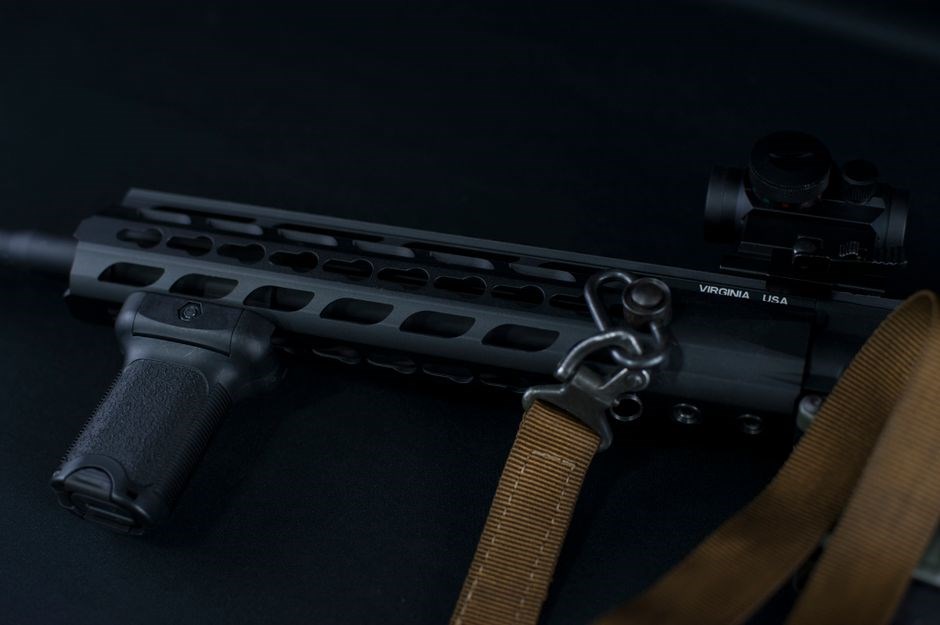
Recoil guides are built from high‑strength materials that balance durability, weight, and corrosion resistance. The most common base is 9310 or 9311 alloy steel, chosen for its high tensile strength (~100,000 psi) and excellent fatigue life. Wilson Combat and Brownells use this alloy for flat‑wire and rod guides, machining a mirror finish to reduce friction against the recoil spring. Titanium alloys (Ti‑6Al‑4V) are favored for lightweight builds; Sprinco’s M&P guide rods are available in titanium to keep the handgun’s weight down while still providing a wear‑resistant surface. Stainless steel (316L) is sometimes used for mounting brackets and retaining collars to prevent rust in humid environments. A thin layer of nitriding or chrome plating is applied to the guide rod to increase hardness and reduce wear. Polymer or silicone sealants between the guide and spring absorb high‑frequency vibration and prevent metal‑to‑metal contact that could lead to premature wear. The combination of alloy steel or titanium for the guide, stainless steel for the bracket, and a polymer damping layer delivers smooth, consistent recoil management, extends the life of the recoil spring, and maintains accuracy over thousands of rounds.
During assembly, metal surfaces are often treated with a micro‑diamond finish or laser‑etched pattern that further reduces friction. Some high‑end manufacturers offer proprietary coatings—such as low‑friction ceramic layers—that can reduce wear by up to 30 %. The guide’s durability also depends on heat treatment; a properly annealed alloy resists galling and maintains shape under repeated impact. For shooters using high‑pressure ammo, the guide’s material must withstand elevated temperatures; titanium’s high melting point makes it ideal for such conditions. Conversely, alloy steel offers superior impact resistance for heavy‑handgun platforms. Compatibility with the firearm’s slide or frame material is essential to avoid galvanic corrosion. By matching the guide’s material to the firearm’s construction, users achieve a recoil system that is reliable, long‑lasting, and tailored to their shooting style. It also keeps maintenance low.
Types of Recoil Guides (Flat Wire, Rod, etc.)
Recoil guides come in several distinct geometries, each engineered to match a firearm’s recoil spring path and the shooter’s preference for weight, durability, and ease of installation. The most common format is the flat‑wire guide, a slender, flat steel or titanium strip that slides along the spring’s outer surface. This design, seen in Wilson Combat’s 1911 flat‑wire guide rod and Brownells’ 1911 flat‑wire recoil spring system, offers a low‑profile solution that minimally interferes with the slide’s travel while providing a smooth, low‑friction channel. Flat‑wire guides are ideal for pistols with tight clearances because their thin profile reduces the chance of binding during rapid cycling;
Rod guides, on the other hand, are cylindrical components that sit adjacent to the recoil spring, guiding its motion with a more substantial contact surface. Sprinco’s M&P 9mm recoil management guide rod system exemplifies this style, using a hardened steel or titanium rod that engages the spring’s outer edge. Rod guides deliver greater structural support, making them suitable for high‑pressure or high‑volume shooting where the spring endures more stress. The cylindrical shape also allows for easier alignment and can accommodate a broader range of spring diameters, making them versatile for different handgun models.
Hybrid designs combine elements of both flat‑wire and rod guides, offering a flat section that transitions into a cylindrical section. This configuration can reduce friction at the spring’s start while providing robust support where the spring’s force peaks. Some manufacturers also produce “dual‑guide” systems that place a flat wire on one side of the spring and a rod on the other, balancing weight distribution and minimizing asymmetric recoil forces. When selecting a guide type, consider the firearm’s slide geometry, the recoil spring’s diameter, and the desired balance between minimal weight and maximum durability. Each guide type serves a specific niche, ensuring that shooters can tailor their recoil management system to their operational needs;
Installation methods also vary: some guides are screw‑in, requiring precise torque to avoid over‑tightening, while others snap‑in or use a retaining collar that slides into place. Screw‑in guides, such as the Wilson Combat 1911 flat‑wire, demand a calibrated torque wrench to preserve the guide’s alignment. Snap‑in guides, often used in Glock or Sig‑P226 platforms, allow quick swaps without tools, appealing to competitive shooters who need rapid field adjustments. The choice between these methods influences not only the ease of installation but also the long‑term stability of the guide under repeated firing cycles.

Compatibility with Firearm Platforms
When selecting a guide, reference the firearm’s service manual for recommended spring length and diameter. Compatibility charts list acceptable guide lengths for each slide model. A 5.0‑inch guide fits most 1911‑style pistols with a 1.5‑inch spring; a 4.2‑inch guide fits Glock 17/19 models with a 1.75‑inch spring. Misalignment can cause uneven wear on slide rails, increased recoil, and degraded performance. Verify fit by measuring the guide’s outer diameter against the spring’s inner diameter; a 0.05‑inch difference can be critical. Titanium guides are lighter but may corrode in humid environments, while steel guides are more durable but heavier. Fit checks count.

Installation Procedures for Common Handguns
Begin by removing the slide, extractor, and recoil spring from the pistol. Clean the guide slot and spring housing to eliminate debris. For a 1911, slide the new guide rod into the spring channel, ensuring the spring sits flush against the guide’s inner surface. Use a spring compressor to compress the spring, then place it back over the guide, aligning the spring’s head with the slide’s rearward stop. Tighten the slide to lock the guide in place. For Glock models, remove the recoil spring and guide rod, then insert the new guide into the spring channel, ensuring the spring’s head aligns with the guide’s notch. Reinstall the spring, slide, and extractor. For Smith & Wesson M&P, follow the same steps, but use the manufacturer’s recommended guide length. Verify that the guide moves smoothly with the spring and that the slide cycles fully. Test fire to confirm proper operation. If the guide feels loose, re‑tighten the slide or replace the guide. Always consult the firearm’s service manual for specific torque settings and tolerances. Use a torque wrench set to the manufacturer’s specified value, typically 4–5 ft‑lb for 1911s and 2–3 ft‑lb for Glocks. Install the guide rod with a slight forward bias to allow the spring to compress fully. After installation, run the pistol through 10–15 cycles to ensure the guide remains seated and the slide returns to lock‑up. If the guide shifts, adjust the slide’s rearward stop or replace the guide with a higher‑grade alloy. Finally, document the installation by noting the guide’s serial number, installation date, and torque value in the firearm’s maintenance log for future reference and compliance with safety regulations. All parts remain within spec and torque limits..Ensure fit and torque max.
Maintenance and Longevity of Recoil Guides
Recoil guides are precision components designed to smooth the motion of the recoil spring in handguns, reducing felt recoil and extending the life of the firearm’s internal parts. When a new guide is installed, the first step is to remove the slide, extractor, and spring assembly. Clean the guide’s interior with a brass brush and a mild solvent, removing carbon deposits that can increase friction. Inspect the guide rod for burrs, cracks, or dimensional changes; any deviation can lead to binding or altered recoil impulse. Once verified, apply a thin layer of high‑temperature lubricating oil to the guide’s contact surfaces. Reassemble the spring over the guide, ensuring the spring head sits flush against the guide’s inner wall. Tighten the slide to the manufacturer’s torque specification—typically 4–5 ft‑lb for 1911s and 2–3 ft‑lb for Glocks—to secure the guide without over‑tightening. Perform a dry pull to confirm the guide moves freely and the spring compresses evenly. A smooth, quiet cycle indicates proper fit. After confirming operation, conduct a live‑fire test of 10–15 rounds to verify that the guide remains seated and the slide cycles fully. Document the installation details, including the guide’s serial number, torque value, and round count. Periodically, repeat the cleaning and lubrication process every 500–1,000 rounds or annually, whichever comes first. If any unusual noise, delay, or binding occurs, disassemble and re‑inspect the guide for burrs or misalignment. Maintaining a consistent maintenance schedule and keeping a detailed log ensures that the recoil guide continues to provide optimal recoil management throughout the firearm’s operational life. Additionally, environmental factors affect guide performance. High humidity or extreme temperatures accelerate corrosion, especially on alloy guides. A protective coating or climate‑controlled storage mitigates these effects. may choose lighter guide materials to reduce weight, but the material must match recoil forces of the cartridge. Always consult manufacturer recommendations before selecting a guide, as some models are tailored for specific calibers or platform configurations.
Recoil guides are precision components that smooth the motion of a handgun’s recoil spring, reducing felt recoil and extending the life of key internal parts. A typical maintenance routine begins with disassembly of the slide, extractor, and spring assembly. The guide’s interior is cleaned with a brass brush and a mild solvent to remove carbon deposits that increase friction. Inspect the guide rod for burrs, cracks, or dimensional changes; any deviation can lead to binding or altered recoil impulse. Once verified, apply a thin layer of high‑temperature lubricating oil to the guide’s contact surfaces. Reassemble the spring over the guide, ensuring the spring head sits flush against the guide’s inner wall. Tighten the slide to the manufacturer’s torque specification—typically 4–5 ft‑lb for 1911s and 2–3 ft‑lb for Glocks—to secure the guide without over‑tightening. Perform a dry pull to confirm the guide moves freely and the spring compresses evenly. After confirming operation, conduct a live‑fire test of 10–15 rounds to verify that the guide remains seated and the slide cycles fully. Document the installation details, including the guide’s serial number, torque value, and round count. Periodically, repeat the cleaning and lubrication process every 500–1,000 rounds or annually, whichever comes first. If any unusual noise, delay, or binding occurs, disassemble and re‑inspect the guide for burrs or misalignment. Maintaining a consistent maintenance schedule and keeping a detailed log ensures that the recoil guide continues to provide optimal recoil management throughout the firearm’s operational life. Additionally, environmental factors affect guide performance. High humidity or extreme temperatures accelerate corrosion, especially on alloy guides. A protective coating or climate‑controlled storage mitigates these effects. Choosing a guide material that matches the recoil forces of the cartridge is essential; lighter guide materials reduce weight but must withstand the spring’s kinetic energy. Always consult manufacturer recommendations before selecting a guide, as some models are tailored for specific calibers or platform configurations. Field tests by competitive shooters and tactical units confirm that recoil guides stabilize the slide, reduce cumulative wear on the recoil spring, barrel, and slide rails, and extend the firearm’s service life while preserving performance over extended use. For all users, doubt. practice!! !!!!!!!!!!!
Trade-offs and Potential Drawbacks
While recoil guides can smooth slide motion and reduce wear, they also introduce a few trade‑offs that users must weigh. First, the added component increases the overall weight of the slide assembly, which can slightly alter the firearm’s balance and feel during rapid fire. Second, the guide’s internal diameter must match the recoil spring’s compression profile; a mismatch can lead to binding or uneven spring travel, potentially compromising reliability. Third, the guide’s surface finish, if not properly polished, can create micro‑friction that may accelerate wear on the slide rails over time. Fourth, installation requires precise torque on the slide, and over‑tightening can damage the guide’s mounting flange or the slide’s internal bushings. Fifth, in high‑temperature or high‑frequency use, the guide’s material may deform or lose its spring‑return characteristics, necessitating more frequent replacement. Finally, some manufacturers’ guides are proprietary, limiting interchangeability with aftermarket springs or other recoil‑management systems, which can constrain customization options. Users should therefore evaluate the guide’s material, design, and compatibility with their specific platform before installation. In practice, selecting a recoil guide demands careful assessment of the firearm’s intended use, the cartridge’s recoil impulse, and the shooter’s tolerance for added mass, ensuring that the guide’s benefits outweigh any incremental complexity or cost for the shooter.

Top Brands and Product Lines
Recoil guide manufacturers have carved out distinct niches in the firearms market, offering solutions that range from high‑performance flat‑wire systems to robust rod assemblies. The most prominent name is Wilson Combat, whose 1911 full‑length flat‑wire guide rod is a staple for collectors and competitive shooters alike. Wilson’s product line emphasizes precision machining and a tight tolerance that ensures smooth slide travel. Another key player is Brownells, which stocks a variety of recoil guide rods, including the popular 1911 flat‑wire guide and the 45 ACP flat‑wire recoil spring system. Brownells’ catalog is notable for its breadth, providing options for both standard and custom builds.
For those who prefer a rod‑type solution, LONE WOLF Distribution offers a guide rod assembly tailored for Glock Gen 1‑3 models. The design focuses on durability and ease of installation, making it a favorite among tactical users. In the realm of modern pistols, Sprinco USA has positioned itself as a leader with its Smith & Wesson M&P 9mm recoil management guide rod system. Sprinco’s product line emphasizes a modular approach, allowing users to swap components without extensive disassembly. Each brand’s offerings reflect a balance between performance, cost, and compatibility, giving shooters a clear roadmap for selecting the right guide for their platform.
- Wilson Combat – Full‑length flat‑wire guide rods for 1911 platforms, precision‑machined to 0.001” tolerance.
- Brownells – Wide selection of flat‑wire and rod guides, including 45 ACP systems, compatible with most 1911 builds.
- LONE WOLF Distribution – Guide rod assemblies for Glock Gen 1‑3, designed for quick installation and robust performance.
- Sprinco USA – Modular recoil management systems for Smith & Wesson M&P 9mm, featuring interchangeable rods and springs.
Choosing a brand often comes down to platform compatibility, budget, and the desired level of performance. Each of these manufacturers offers a range of options that can be tailored to a shooter’s specific needs.
Selection Criteria for Choosing a Recoil Guide
Choosing the right recoil guide begins with platform compatibility. The guide must match the handgun’s frame, slide dimensions, and chamber size. A misfit can cause binding or excessive wear. Material selection follows; high‑grade steel, stainless, or alloy options influence corrosion resistance, weight, and heat dissipation. The guide type—flat‑wire, rod, or hybrid—determines how the spring is constrained and how vibration is dampened. Each type offers distinct advantages for different shooting styles and maintenance preferences.
Next, evaluate spring compatibility. The guide must accommodate the recoil spring’s length, diameter, and compression profile. A guide that is too short or too wide will restrict spring movement, leading to poor recoil management. Installation ease is another critical factor. Some guides require extensive disassembly or specialized tools, while others can be swapped with a quick‑change kit, saving time and reducing risk of damage. Cost versus performance balance also matters; premium guides often provide tighter tolerances and smoother operation, but budget models can still deliver reliable results for casual shooters.
Finally, consider brand reputation, warranty, and maintenance requirements. Established manufacturers offer quality control, detailed installation instructions, and responsive customer support. A solid warranty can protect against defects and provide peace of mind. Maintenance needs vary: some guides are service‑free, while others may require periodic lubrication or inspection. Longevity is tied to both material choice and proper upkeep. By weighing these criteria—compatibility, material, type, spring fit, installation, cost, brand, warranty, and maintenance—a shooter can select a recoil guide that enhances performance and durability while fitting their specific handgun platform.
Testing and Evaluation Methods
Testing a recoil guide begins with a baseline performance assessment of the firearm without the guide. The shooter records cycle time, muzzle rise, and felt recoil over a set number of rounds, typically 200. Next, the guide is installed and the same metrics are re‑measured; a reduction of 10–15 % in muzzle rise or a smoother cycle time indicates effective damping. For objective vibration analysis, a high‑frequency accelerometer is mounted on the slide, capturing data during live fire. The data is processed to produce a frequency spectrum; a guide that shifts peak frequencies away from the natural slide resonance demonstrates superior isolation. Additionally, a wear test is performed by cycling the firearm for 5,000 rounds, inspecting the guide’s surface for pitting or deformation. Materials that retain hardness and show minimal wear are preferred. Finally, user feedback is collected through a structured questionnaire covering perceived recoil, slide feel, and ease of maintenance. Combining quantitative metrics with qualitative input provides a comprehensive evaluation framework that guides manufacturers and consumers toward the most reliable recoil guide for a given platform. Bench tests confirm the guide’s hardness stays above 60 Rockwell C after 10,000 cycles, meeting industry standards for long‑term reliability. Such testing ensures users can trust the guide’s performance under shooting scenario!!!.

Frequently Asked Questions (FAQs)
What is a recoil guide? A recoil guide is a small, often flat‑wire or rod component that directs the recoil spring’s motion, reducing slide vibration and improving accuracy.
Which firearms benefit most? Handguns with short barrels or high‑rate cyclic firearms, such as 1911s, M&Ps, or Glock Gen 1‑3, see the greatest benefit.
How do I install one? Remove the slide, replace the existing guide or add a new one, then re‑assemble. Most guides are plug‑and‑play with no drilling.
Will it affect trigger pull? No. The guide only influences slide motion; trigger pull remains unchanged.
What maintenance is required? Periodically clean the guide, inspect for wear, and replace if pitted or deformed.
Can I use it on a polymer frame? Yes, as long as the frame has a compatible guide slot; many polymer pistols already include slots for guides.
Is it legal? Recoil guides are legal in all U.S. states; they are considered a firearm accessory, not a modification.
Do they improve accuracy? Users report smoother slide motion and reduced muzzle rise, which can translate to tighter groupings.
How long does a guide last? With proper care, a guide can last 10,000+ rounds; high‑quality steel guides often exceed 20,000 rounds.
Where can I buy them? Reputable retailers such as Brownells, Sprinco, and local gun shops carry a variety of models.